Reinforced Concrete Masonry Structures (also known as Reinforced Concrete Block Structures) rank as one of the most durable and cost-effective types of structural systems in modern building construction.
Comprised primarily of concrete masonry units (also known as CMUs), mortar, and reinforcing steel, reinforced concrete masonry structures are typically designed to meet the minimum code requirements for wind loads, seismic loads, and more depending on the region and operating environment.

That said, over time, even the most robust masonry structures experience deterioration.

This is most notable in harsh environments (i.e. marine, industrial, sulphate-rich, or chloride-rich environments), in which such structures are often built.
Below are the top signs of concrete masonry deterioration.
![]()
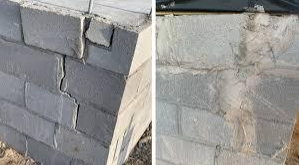
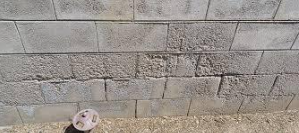
Cracking:
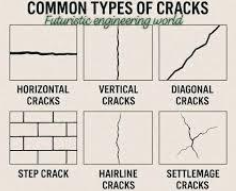
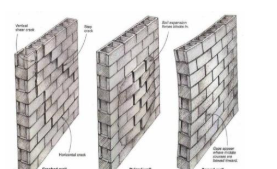
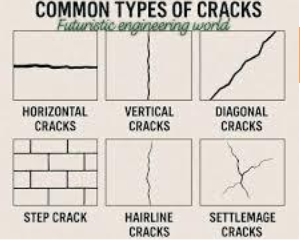
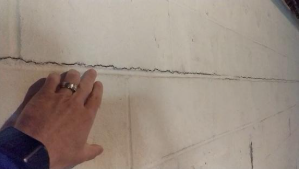
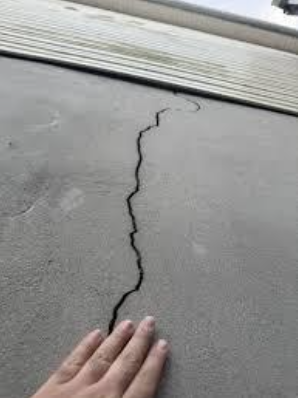
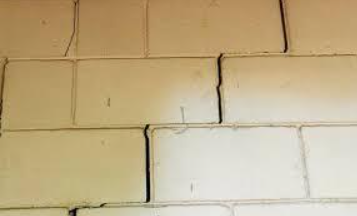
Horizontal Cracks, Vertical Cracks, Stepwise Cracking, and hairline cracks all indicate structural deterioration, with severe (i.e. wide) cracking indicating structural overburdening.

Severe cracking, especially severe cracking with bulging, may require the immediate attention of a qualified structural engineer.
If your facility is exhibiting signs of severe cracking with bulging, consult a licensed structural engineer as soon as possible.

Bulging:
Bulging, especially bulging accompanied by severe cracking, may indicate excessive deflection and structural overburdening.

Severe bulging, especially of vertical load supporting elements (i.e. columns and walls) requires the immediate attention of a qualified structural engineer.
If your facility is exhibiting signs of severe bulging consult a licensed structural engineer as soon as possible.
CMU Pitting:
CMU Pitting involves the formation of small cavities on the concrete block surface.

Such cavities indicate localized disintegration of the concrete matrix.
It is advised to consult structural engineer and to repair pitting sooner than later

Spalling / Flaking:
Crumbling, spalling, or flaking of the CMU block surface may indicate reduction in load bearing capacity of structural elements.

Potential causes of spalling and flaking include water intrusion.
Excessive spalling can lead to overall reduced load capacity, and further structural issues.

Consult structural engineer for remediation options sooner than later.
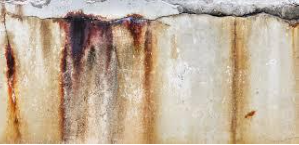
Rust Stains:
The presence of excessive reddish/brown stains along your masonry structure may indicate the permeation of water throughout the structure, resulting in the formation of rust.
Excessive water intrusion can lead to corroded steel reinforcement, reduced load capacity, and further structural issues.
Consult structural engineer for remediation options.
Efflorescence:
The presence of excessive white salt stains along your masonry structure may indicate efflorescence.
Efflorescence is the phenomenon in which residue forms on a structure when water carries the soluble minerals in the CMU Unit and mortar to the structure surface and then evaporates, leaving salts behind.
Consult structural engineer for remediation options.
Early detection through regular visual inspections and non-destructive testing is crucial to manage and mitigate further damage to reinforced concrete masonry structures.
Vanessa Malone, P.E.
Principal | Preeminent Solutions, Inc.
📞 (321) 244-8699 | (407) 901-0133
✉️ info@psengrinc.com
🌐 www.psengrinc.com