Historical renovation projects provide unique challenges to Construction-Defect Defense Litigators.
According to Florida Statutes Chapter 558, the term “construction defect” includes any deficiency in, or a deficiency arising out of, the design, construction, repair, alteration, or remodeling of real property resulting from defective materials, code violations, and more.
For Construction-Defect Defense Litigators, ascertaining the causation, and thus liability of a construction defect, while avoiding technical blindsides and reigning in projected costs can be a daunting process. This is most notable for litigators seeking causation for construction and design standard-of-care violations, and those seeking causation for code violations and defective material quality.
For construction or design defects involving major components it is generally advisable to engage construction-defect experts early on in the case to determine causation, reduce risks, and limit costs.
Particularly, for construction or design defects involving structural components it is generally advisable to engage construction-defect and structural forensic engineering experts early on in the case to determine causation, reduce risks, and limit costs.
Below are the top 5 structural Blind Spots in Historical Building Renovation for Construction-Defect Defense Litigators + 1 Bonus Blind Spot.
Should your team require assistance with construction or design defects involving structural components consult structural forensic engineering experts.

-
Differential Settlement
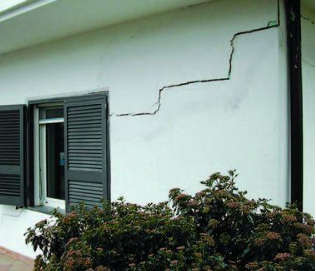 Many historic buildings have shallow or mixed foundation types, making them susceptible to shifting or tilting during Renovation.
Renovation changes including demolitions, heightened vibration loading, overloading, and additions, may negatively impact the structure’s foundation resulting in differential settlement.
Key signs of differential settlement include:
- Structural Cracks at Building Corners
- Structural Cracks at Building Openings
- Sloping or Uneven Floors
- Separations of Main and Auxiliary Structures
Cracking patterns must be carefully mapped to separate old movement from new Renovation construction-caused movement.
Contact a qualified structural forensic expert and a qualified geotechnical expert should the subject structure display any of the above signs of differential settlement.
-
Deteriorated Connections:
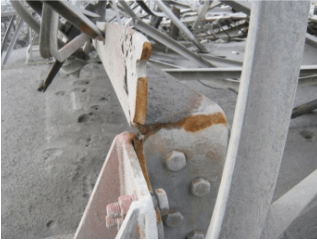 Significantly rusted connections, deformed bolts, cracked welds, and failed metal plate connections pose a significant risk to historic buildings under modern loads.
Furthermore, rusted or brittle connection failures can be sudden under dramatically increased loading.
Key Signs of connection failure include:
- Severe cracking, especially severe cracking with bulging.
- Excessive Floor Deformation
- Excessive Ceiling Sagging
- Rusted Connection Bolts, Rivets, and Plates
- Deformed Connection Bolts, Rivets, and Gussets
- Fractured Welds
- Concrete Cracking directly under heavy bearing plates and joist seats.
- Deformed, Buckled, Bent, or Warped Gusset Plates and Brackets.
Consult Preeminent Solutions’ Free Online Education Center for resources and checklists regarding structural deformations:
Link: https://psengrinc.com/learning/
Contact a qualified structural forensic expert should the subject structure display any of the above signs of connection failure.
-
Rooftop Equipment Overload:
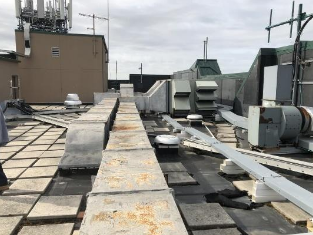 Change-of-Use Renovations, such as the addition of heavier or ill-positioned HVAC units, exhaust fans, solar panels, screens, platforms, and/or telecom equipment, may create concentrated loads, vibration, wind uplift, or diaphragm penetrations on historic roofs resulting in overburdening.
Key Signs of overburdening due to change-of-use load increases include:
- Severe cracking in Beam and Slab Elements
- Excessive Deflections in Beam and Slab Elements
- Concrete Spalling and Chipping
Consult Preeminent Solutions’ Free Online Education Center for resources and checklists regarding structural overloading:
Link: https://psengrinc.com/learning/
Contact a qualified structural forensic expert should the subject structure display any of the above signs of overloading.
-
Historic Concrete Carbonation:
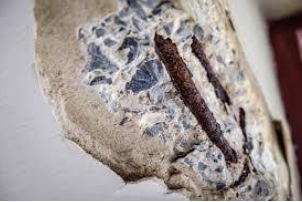 Concrete carbonation is a chemical reaction that occurs when atmospheric carbon dioxide reacts with the alkaline compounds (i.e. calcium hydroxide) within concrete to form calcium carbonate. Concrete carbonation reduces concrete’s pH and leading to corrosion of the steel reinforcement.
Although carbonation is a slow process, older structures with insufficient concrete cover concrete cover, cracking, and other deficiencies may show signs of carbonation during Renovation.
Key signs of concrete carbonation include:
- Chalky Concrete Surfaces.
- Rust-Colored Discharge or streaking on the surface
- Concrete Cracking, Spalling & Delamination
Consult Preeminent Solutions’ Free Online Education Center for resources and checklists regarding concrete deterioration:
Link: https://psengrinc.com/learning/
Contact a qualified structural forensic expert should the subject structure display any of the above signs of concrete carbonation.
-
Weak Floor and Roof Diaphragms:
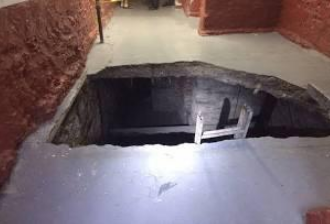 Renovations, including Change-of-Use Renovations, may result in heighted Live Loads, including new Equipment Live Load demands and Equipment Vibration Load demands on historic floors and roofs.
In many cases, historic floors and roofs may not function as efficiently modern diaphragms in the transfer of lateral loads to shear walls or frames.
Likewise, in many cases, historic floors and roofs may lack adequate diaphragm continuity, leading to a compromised diaphragm.
Key signs of a compromised diaphragm include:
- Roof Separation at Inside Corners of “L” or “U” shaped buildings.
- Buckled, cracked, or fractured Chord Members
- Wall-to-Roof Separation
- Wall-to-Floor Separation
- Unreinforced Floor Cutouts
- Connection Failures
Consult Preeminent Solutions’ Free Online Education Center for resources and checklists regarding structural deformations:
Link: https://psengrinc.com/learning/
Contact a qualified structural forensic expert should the subject structure display any of the above signs of a compromised roof diaphragm.
-
BONUS: Chloride Contamination in Coastal Structures:
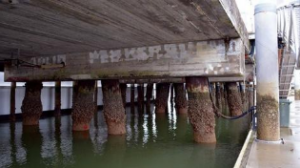 Coastal and Marine structures may have chloride-contaminated concrete and corroding reinforcement.
Renovations may uncover such contamination in coastal structures, particularly in coastal balconies, pool decks, and exposed slabs.
Key signs of Chloride contamination in coastal structures include:
- Rust Staining
- Concrete Cracking
- Concrete Spalling & Delamination
- Concrete Efflorescence
Consult Preeminent Solutions’ Free Online Education Center for resources and checklists regarding marine concrete deterioration:
Link: https://psengrinc.com/learning/
Contact a qualified structural forensic expert should the subject structure display any of the above signs of coastal chloride contamination.
Early involvement of structural engineering and construction-defect experts can make or break a case.
Reach out if your team is in need of structural forensic or construction defect expert witness support.
Article written by:
Vanessa Malone, P.E.
Principal | Preeminent Solutions, Inc.
📞 (321) 244-8699 | (407) 901-0133
✉️ info@psengrinc.com
🌐 www.psengrinc.com