Preeminent Solutions Engineering

TOP SIGNS OF STEEL CORROSION IN STRUCTURES

Overview

Corrosion is a constant and incessant threat to the longevity and integrity of steel structures. 

Although corrosion is generally a time-dependent process, several environmental conditions (i.e. high heat environments, high humidity environments, and chloride-rich environments), accelerate the degradation of the steel. Such degradation is most notable in steel sections left unprotected or inadequately protected in humid and/or marine environments.

As steel structures age, efficient and effective structural evaluation and maintenance becomes essential to structural longevity and integrity. Below are the top indicators of steel corrosion in humid or marine environments.

So, What Are the Signs of Deterioration?

Corrosion


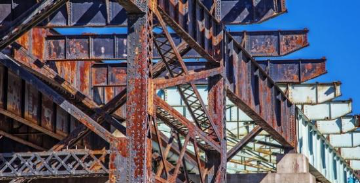
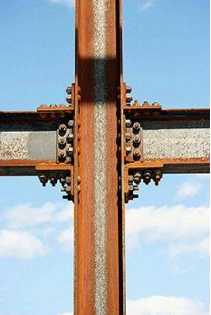
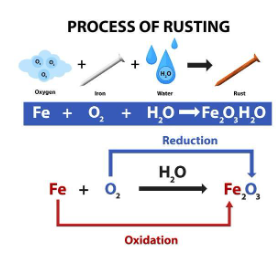
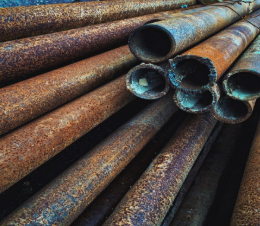
Steel corrosion involves the formation of rust – i.e. red, flaky, porous, irregular deposits of hydrous iron(III) oxides (Fe2O3·nH2O) and iron(III) oxide-hydroxide (FeO(OH), Fe(OH)3).

By its nature rust is incompatible with structural longevity and integrity.

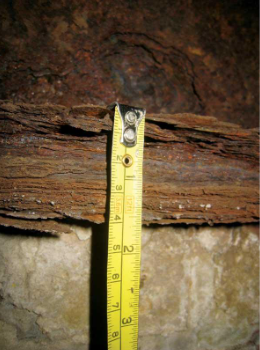
The formation of rust involves the replacement of solid steel with flaky, porous, irregular deposits that are readily sloughed off with rain and/or similar environmental conditions.

This produces a precarious situation, especially at joints and connections for critical structural elements
It is advised to consult structural engineer to evaluate section loss resulting from rust and to repair advanced corrosion sooner than later

Pitting (Localized Attacks in Metal)

Pitting involves the formation of small pinholes or craters in the steel metal surface.
Such cavities indicate localized attack and are common in chloride-rich environments (i.e. splash zones in marine environments).
It is advised to consult structural engineer and to repair pitting sooner than later

Blistering / Flaking of Coatings 

In the case of coated metals, blistering or flaking may occur due to the formation of rust layers in between the base metal and the coating.

Such blistering of flaking can affect the long-term performance of a structure. 

It is advised to consult structural engineer or materials specialist for further details.

Structural Deformation: Bulging/Warping

Structural elements with little or no coating protection may exhibit structural deformations including and those colloquially known as “rust jacking” or “oxide jacking.” 

Rust jacking is the destructive bulging of steel as it undergoes oxidization within confined spaces.

Such rust jacking negatively affects the long-term performance of a structure and may result in warping.

It is advised to consult structural engineer or materials specialist for further details.

Early detection through regular visual inspections and non-destructive testing is crucial to manage and mitigate further damage to structures. 

Vanessa Malone, P.E. 

Principal | Preeminent Solutions, Inc. 

📞 (321) 244-8699 | (407) 901-0133 

✉️ info@psengrinc.com 

🌐 www.psengrinc.com

When You and Your Team Need Civil/Structural Support
Give Us A Call!

Author

  • 1735826439175

    Vanessa Malone, P.E. is the Owner of Preeminent Solutions, Inc.

    She is a licensed civil / structural engineer with almost 15 years’ experience in civil/structural design, forensics, and expert work.

    She is licensed in Florida, California, Texas, Washington D.C., Virginia, Maryland, New York, New Jersey, Louisiana, Georgia, Mississippi, North Carolina Tennessee, and several other states and territories.

    She has worked with Thornton Tomasetti, Westinghouse, NASA, NOAA, the Navy, Southern Nuclear, General Electric, Bechtel, and other companies.

    Malone is a first generation American. She first emigrated to the continental United States almost 20 years ago.

    Malone shares her love of engineering through her company and through her interactions with other firms.

    Thank you and we look forward to serving you!