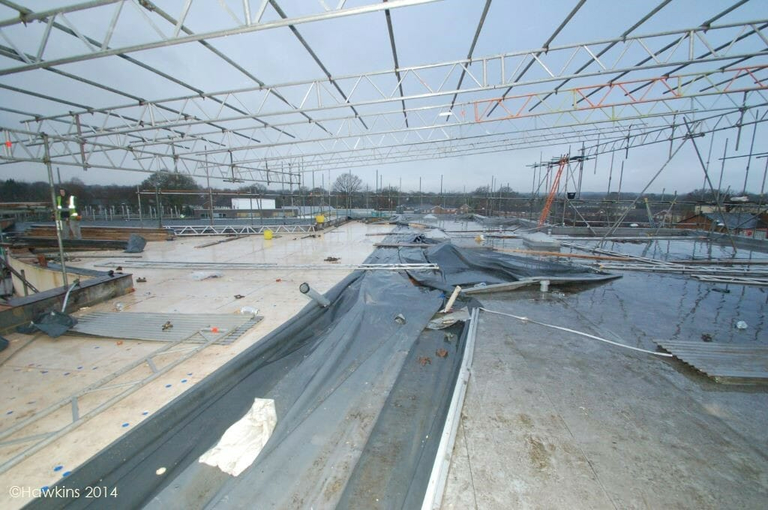
Here’s why you might need a structural engineer for water damage:
1. Assessing Structural Integrity After Wind Damage
Why: Strong winds, particularly during severe weather events, can cause damage to the roof, walls, and other structural components. Wind can lift parts of the roof, cause the collapse of walls, or even shift or destabilize the foundation. Even if the visible damage doesn’t seem extensive, wind may have caused internal damage that compromises the building’s safety.
Action: A structural engineer will inspect the building to assess:
Roofing damage, including missing shingles, lifted roofing, or structural deformations.
Damage to load-bearing walls, beams, and columns that may have been caused by wind pressure.
Shifting or cracking of the foundation, which could occur if the building was subjected to high winds or a tornado.
Displaced or deformed structural elements like framing, trusses, or steel supports.
2. Identifying Hidden Damage
Why: Wind damage can cause hidden structural issues that are not immediately visible, especially if it involves components like the roof trusses, beams, floor joists, or framing. If wind causes lateral movement, it could weaken or shift the foundation and load-bearing elements, leading to long-term instability.
Action: A structural engineer can identify hidden damage, such as:
Cracks in the foundation or settling caused by shifting due to wind forces.
Structural movement in the framing, beams, or floor joists that might not be immediately visible.
Warped or buckled roofing trusses or framing caused by wind uplift or pressure.
3. Determining Safety and Stability
Why: After significant wind damage, the building may be unsafe due to compromised structural elements. For instance, a damaged roof or wall can lead to further structural failures or cause collapse if not properly addressed. The building could also be at risk of further wind damage if structural weaknesses are not repaired.
Action: The structural engineer will assess whether the building is safe to occupy and stable. They will:
Evaluate the overall stability of the structure, checking for shifting, deformation, or any significant movement caused by wind forces.
Assess roofing and wall connections to ensure they are secure and capable of withstanding future storms.
Identify any temporary stabilization measures needed to secure the structure.
4. Documenting Damage for Insurance Claims
Why: Insurance companies typically require detailed documentation of wind damage to process a claim. A structural engineer’s report provides objective evidence of the extent of the damage, which can help ensure you receive a fair settlement for necessary repairs.
Action: The engineer will prepare a detailed report that:
Describes the damage to load-bearing elements, the roof, walls, and other structural components.
Includes photographs, drawings, and measurements of the affected areas.
Provides an objective assessment of the severity of the damage.
Offers recommendations for necessary repairs and associated costs.
5. Recommending and Overseeing Repairs
Why: Wind damage may require specialized repairs to restore the building’s structural integrity. For example, a roof that has been uplifted by wind might need to be re-secured, or walls that have shifted may require reinforcement. These repairs must be done correctly to ensure the building is safe and stable.
Action: The structural engineer will recommend and oversee repairs, such as:
Reinforcing or replacing beams, roof trusses, or walls that have been damaged by wind forces.
Repairing cracks or shifts in the foundation or framing.
Ensuring that the building is reinforced for future wind events, possibly through storm-proofing or the installation of wind-resistant systems.
Ensuring all repairs are completed in accordance with local building codes and safety standards.
6. Ensuring Code Compliance for Repairs
Why: Repairs made to a structure after wind damage must comply with local building codes to ensure they meet safety standards, particularly if the damage is extensive. In some areas, buildings are required to be upgraded to meet more stringent codes to withstand future wind events (such as hurricane-rated windows or reinforced roofing).
Action: The engineer will ensure that all repairs meet local building codes and safety requirements, including:
Installing wind-resistant materials or structural reinforcements.
Using hurricane-rated roofing or storm shutters if necessary.
Ensuring all repairs are compliant with code updates related to wind resistance and building safety.
7. Resolving Disputes with the Insurance Adjuster
Why: In some cases, the insurance adjuster may not fully recognize the extent of the wind damage or may underestimate the cost of repairs. A structural engineer can help resolve such disputes by providing an independent, expert assessment of the damage.
Action: If you are having trouble getting a fair settlement from the insurance company, the structural engineer’s assessment can provide:
A detailed breakdown of the structural damage and the required repairs.
Support for claims disputes, ensuring that the insurance company covers the necessary repairs.
Evidence to help negotiate a fair payout based on the actual extent of the damage.