
RESORT STRUCTURAL DEFECTS: CASE STUDY
Introduction
A RESORT AND SPA HOTEL
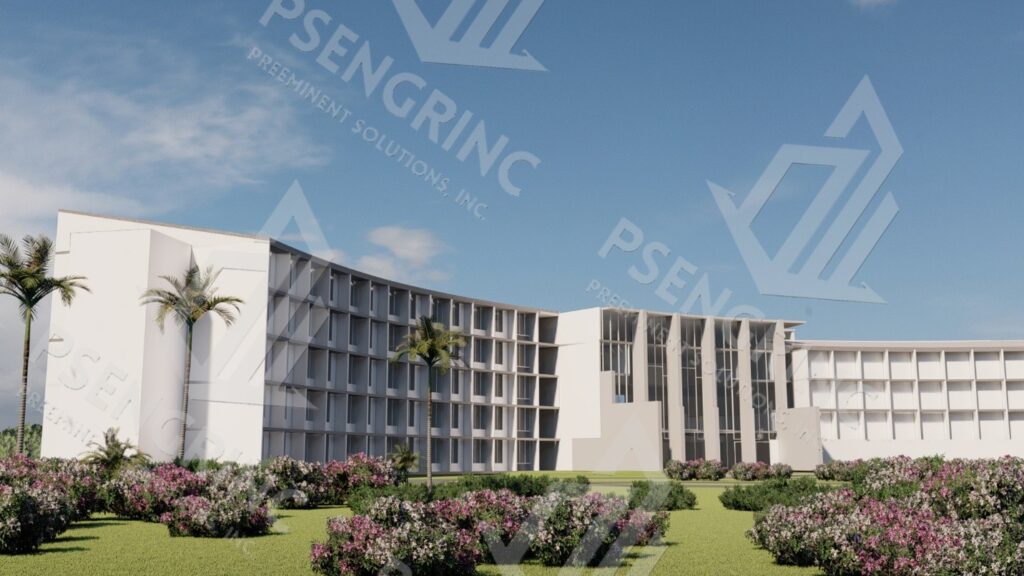
Preeminent Solutions, Inc. is pleased to offer this report for the preliminary evaluation of the main lateral and vertical force resisting structural components of the existing primary structure for a resort and spa hotel. In particular, the study provides findings and recommendations resulting from the inspection and evaluation of the mezzanine deck and tunnel to address code violations. The study also provides findings and recommendations resulting from the inspection and evaluation of the main building roof to address potential future loadings as required for the construction of a roof top bar.
Problem Statement / Objectives
In particular, the report provides findings and recommendations resulting from the inspection and evaluation of the mezzanine deck and tunnel to address code violations. The report also provides findings and recommendations resulting from the inspection and evaluation of the main building roof to address potential future loadings as required for the construction of a roof top bar.
Based on inspection observations, the subject structure displays several key structural deficiencies that should be addressed as soon as possible. Deficiencies include failure of building envelope via roof opening and major cracking along laundry room equipment slab / foundation slab.
The resort and spa hotel is a 5-storey commercial building grossing over 126,610 sq-ft. with concrete block exterior walls and reinforced concrete foundation. The structure is roughly 53 years old (1972 build).
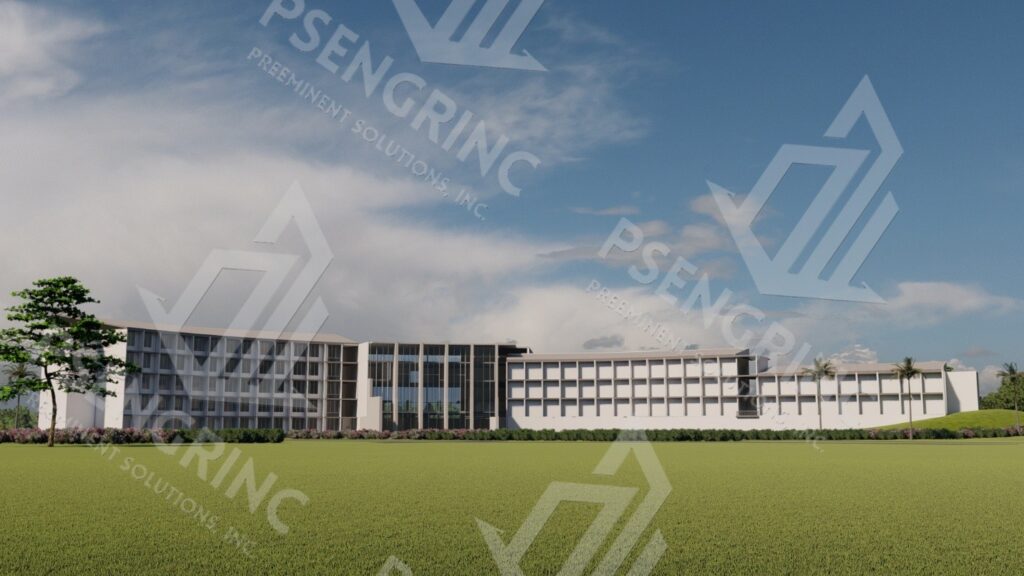
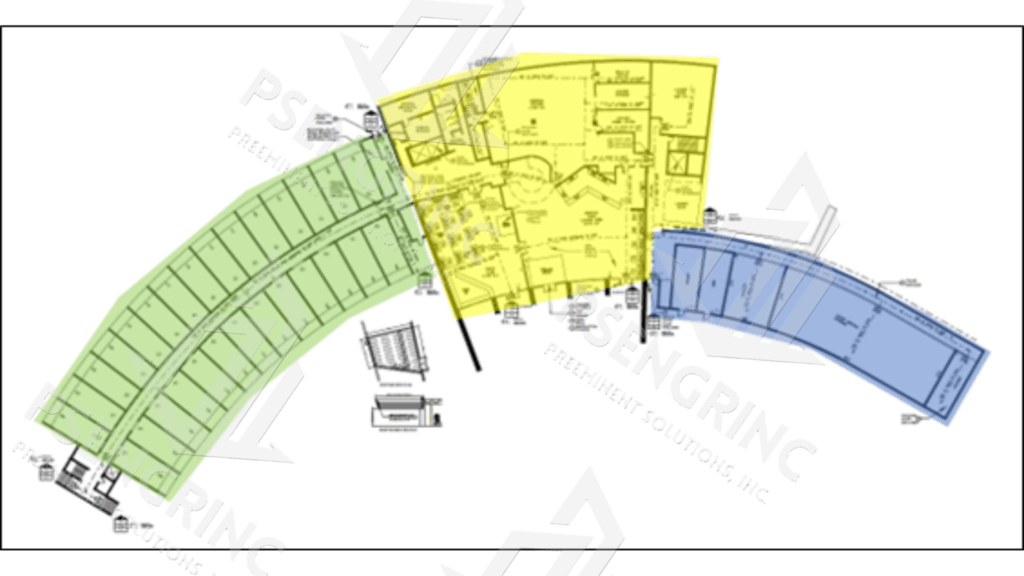
The structure includes one (1) main building and two (2) wings.
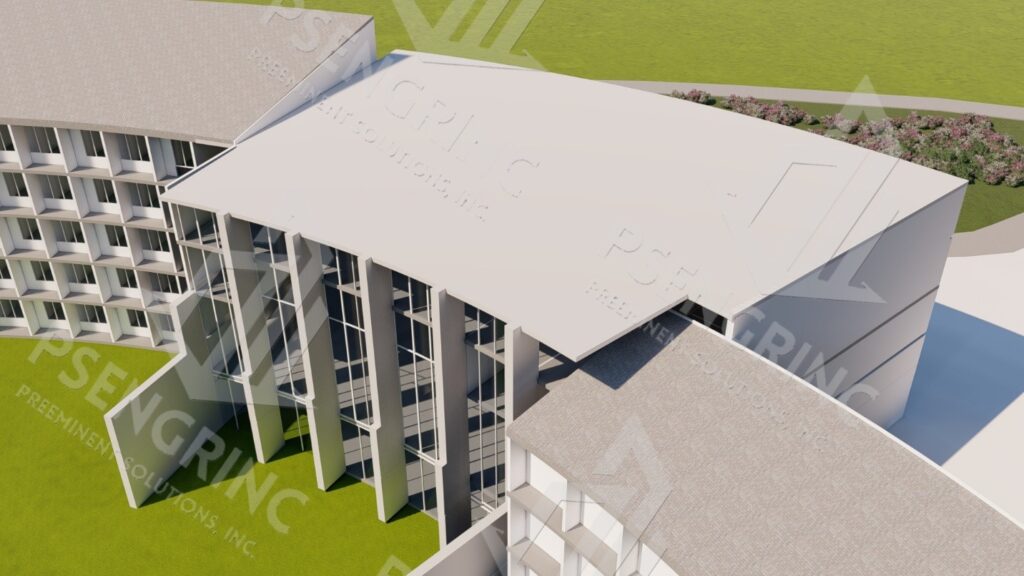
The main building houses the lobby, the wood deck, and the potential location for the rooftop bar.
• Structural Description – Roof and Roof Truss System
Roof truss system utilizes 28in-deep modified Warren truss, with a roughly 3ft 9in center-to-center spacing between adjacent trusses. The roof truss has regular panel spacing of 2ft.
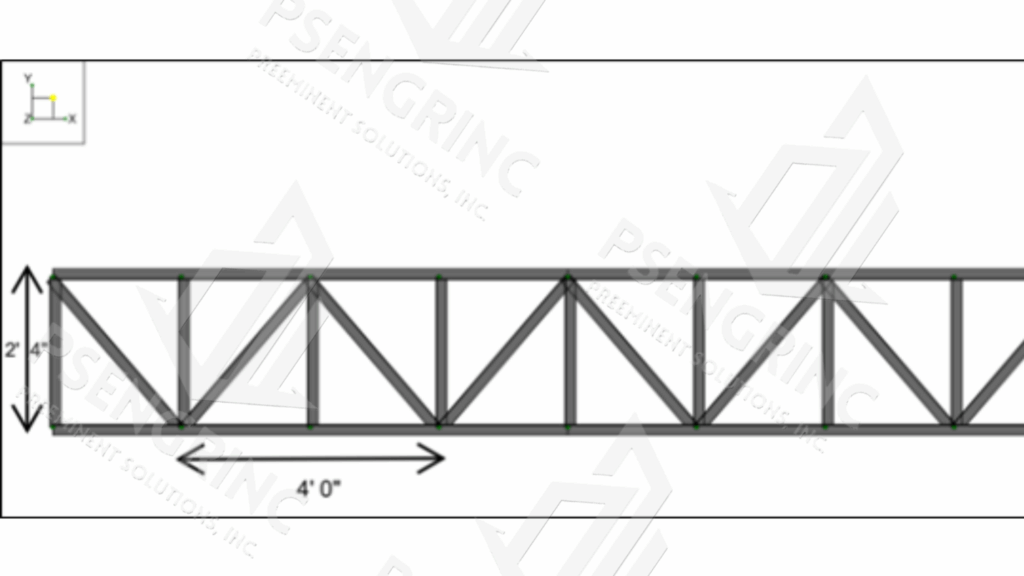
Truss top and bottom chord members appear to be 2 L2x2x3/16 double angle sections spaced roughly ¾ in apart. Truss diagonal and vertical members appear to be non-standard L1x1x1/8 single angle sections. Roof decking appears to be corrugated metal decking.
• Structural Description – Tunnel
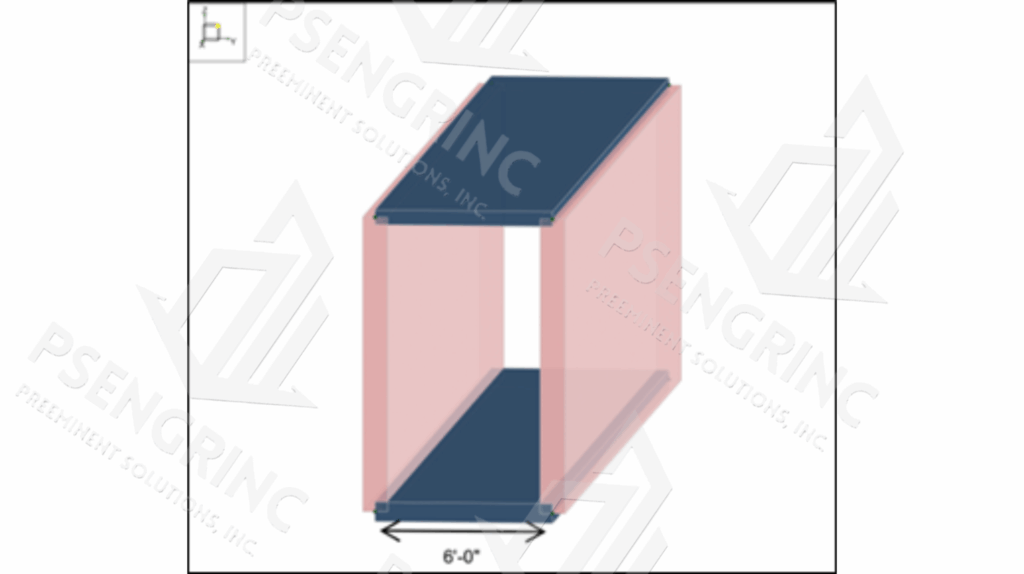
The interior concrete wall separating the north and south suites serves as a primary structural partition within the building. The wall contains one previously modified 6′-4″ opening (currently infilled with gypsum/stud framing) and a proposed 6′-8″ new opening to be cut through the concrete.
• Structural Description – Wood Deck
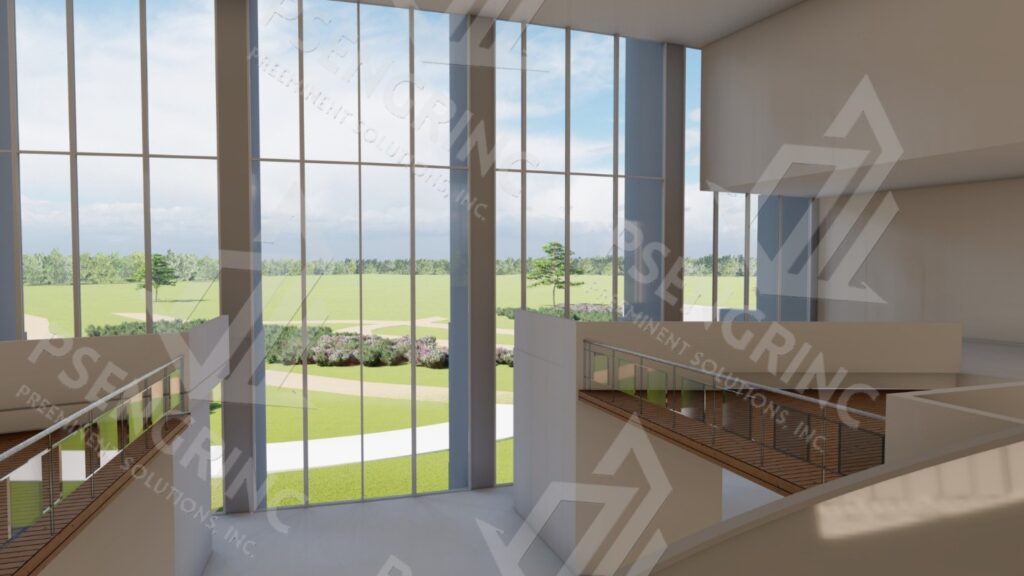
The wood deck comprises the flooring system of the mezzanine located on the 2nd floor of the building. Deck system is comprised of 2”x12” sawn lumber members. Note: Deck properties including, but not limited to, sheathing; connection detail; anchorage detail; and use of fire-retardant-treated wood or preservative-treated wood are not known at the time of this study.
Analysis / Findings
• Site Description
Federal Emergency Management Agency (FEMA) data indicate that part of the site is located in a “Special Flood Hazard Area.”
US Geological Survey (USGS) data for the nearest Groundwater Station, USGS 282835081305201 Palm Lake Drive Well Near Windermere, FL, (Coordinates 28°28’39″N, 81°30’26” W), located roughly 5 miles away from the structure of interest, indicate a maximum ground water level of 77.48 ft NAVD88 (78.40 ft NGVD29) from 01/01/2015 to present.
Per the survey documents for the structure, the base floor elevation is 96.3 ft NAVD88, roughly 18.82 ft higher than the maximum ground water level of the nearest USGS ground water station.
• Code Consideration and Key Areas of Interest
The study addresses the inspection and evaluation of the mezzanine deck and tunnel to address code violations.
Likewise, the study addresses the inspection and evaluation of a portion of the main building roof to address potential future loadings as required for the construction of a roof top bar.
• Observations
The Preeminent Solutions performed an initial site inspection of the structure on 26 March 2025.
For the purpose of the study, all directions are given from the perspective of an individual facing due North. For the purpose of the study, directions coincide with global directions.
Observations made during this site inspection followed, but were not limited to, recommendations described in the American Society of Civil Engineers (ASCE) Guidelines for Structural Condition Assessment of Existing Buildings, Standard SEI/ASCE 11-99. Furthermore, analysis has been conducted in accordance with several other standards including, but not limited to, ASTM E678-07, Reapproved 2013; the 2023 Florida Building Code, Building, 8th Edition; and 2023 Florida Building Code, Existing Building, 8th Edition. Note: The Florida Building Code is a set of statewide standards, established to ensure the safety, health, and general welfare of building occupants.
Recommendations
• Roof and Roof Truss System
- Opening in Roofing Membrane Near Main Roof Entry Door:
It is advised to confirm extent of the opening and degree of moisture intrusion via follow-up site inspection and testing methods.
- Blistering in Built Up Roof System
Blisters exceed 2 ft in length and appear to affect roof’s ability to shed water. Blisters of this size may be caused by excess moisture in roof system.
It is advised to inspect roofing materials for moisture intrusion via follow-up site inspection and testing methods.
- Ponding Water on Built Up Roof System
Ponding water exasperates the deterioration of the roof membrane
It is advised to address roof slope issues via the use of crickets (also called saddles) or similar device to properly route water to drainage points.
• Tunnel
Major and minor cracking was observed throughout the tunnel and its auxiliary rooms. As a general note, further inspection and testing is advised to attain pertinent data to determine appropriate repair method(s) needed to address the observed deficiencies.
• Tunnel / Basement Laundry Area
- Stepwise Cracking in Masonry Walls, South West Interior Face of Laundry Area
It is recommended to repair shrinkage cracking using concrete patching compound or epoxy patching.
- Stepwise Cracking in Masonry Walls, South Interior Face of Tunnel Auxiliary Rooms appears to be consistent with differential settlement.
The pertinent section of the wall resists soil on the exterior face and has a high likelihood of water intrusion.
- Alteration / Removal of Section of Interior Tunnel Wall
Alterations affect the vertical load path of the building and result in load sharing and potential overloading for neighboring column and wall elements.
Structural analysis is recommended to determine new load path on existing wall and neighboring column and wall elements.
• Wood Deck
As noted above, the deck comprises the main structural component of the Level 2 mezzanine floor supporting Dead Loads and Live Loads.
In order to be in compliance with the 2023 Florida Building Code, it is recommended to remove existing wood deck and replace with metal deck or material that complies with requisite building code.
• Potential Future Loadings
Due to this increase, structural retrofit is recommended for the roof system and all elements along the vertical path.
Conclusions
The subject structure displays several key structural deficiencies. Deficiencies include failure of building envelope via roof opening and major cracking along laundry room equipment slab / foundation slab. It is advised to address these deficiencies as soon as possible.
Due to the degree of unknowns, further inspection, testing, and/or review of original structural drawings and as-built structural drawings is required.
Likewise, due to the degree of deficiency, structural analysis is advised prior to major repair and retrofit.