Historical renovation projects can be tricky for General Contractors.For construction or design issues involving structural components it is generally advisable to consult qualified structural forensic engineering experts early on in the process to safely renovate and reduce risk.
Below are the top 5 structural blind spots in Historical Building Renovation for General Contractors
Should your team require assistance with structural issues consult qualified structural forensic engineering experts.

-
Parapet Instability
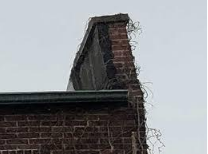 Historic parapets are often poorly anchored to the main structure.
As a consequence, poorly secured parapets are often vulnerable to wind loads, seismic loads, equipment loads, and vibration loads.
Unstable parapets present safety and structural hazards.
Key signs of parapet instability include:
- Severe Parapet Wall Bulging
- Severe Parapet Wall Horizontal Cracking & Spalling
- Visible gaps where the roof surface meets the parapet.
- Sagging flashings where the roof surface meets the parapet
Consult our page for resources regarding structural instability:
Link: https://psengrinc.com/learning/
Contact a qualified structural forensic expert should your structure display any of the above signs of a parapet instability
-
Rooftop Equipment Overload
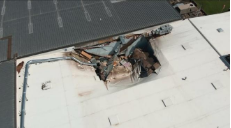 Change-of-Use Renovations, such as the addition of heavier or ill-positioned HVAC units, exhaust fans, solar panels, screens, platforms, and/or telecom equipment, may create concentrated loads, vibration, wind uplift, or diaphragm penetrations on historic roofs resulting in overburdening.
Key Signs of overburdening due to change-of-use load increases include:
- Severe cracking in Beam and Slab Elements
- Excessive Deflections in Beam and Slab Elements
- Concrete Spalling and Chipping
Consult Preeminent Solutions’ Free Online Education Center for resources and checklists regarding structural overloading:
Link: https://psengrinc.com/learning/
Contact a qualified structural engineer if your structure displays any of the above signs of overloading.
-
Fire-Damaged Framing:
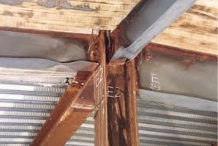 Renovation construction on historic structures may uncover past fire damage that was never fully repaired.
From distorted steel sections, charred timber, to spalled concrete, severe fire damage significantly diminishes the strength of historical structures.
Key Signs of fire damage include:
- Buckling & Bowing Steel Members
- Sagging Steel Beams
- Spalling Concrete Members
- Delaminated Concrete Members
- Chalky or Crumbling Concrete Members
- Severely Cracked Concrete Members
- Warping or Buckling Wood Members
Contact a qualified structural engineer if your structure displays any of the above signs of fire damage.
-
Termite Damaged Framing:
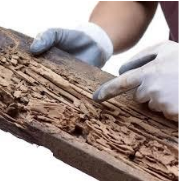 Renovation construction on historic structures may also uncover past termite damage that was never fully repaired.
From hollowed timber sections to sagging wood joists, severe termite damage diminishes the strength of historical structures.
Key Signs of Termite damage include:
- Hollow-Sounding Wood Members
- Buckling or Blistered Wood Floors
- Tiny Holes Throughout Wood Structural Members
Contact a qualified structural engineer if your structure displays any of the above signs of past termite damage.
-
Water Intrusion:
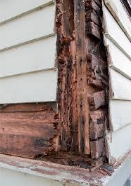 During renovation, historic materials are more susceptible to water intrusion.
Excessive water intrusion can damage wood framing elements and lead to corrosion in steel and cast-iron elements.
Key signs of water intrusion include:
- Warped Floorboards and Subflooring.
- Efflorescence in Concrete Structures
- Rust Staining in Reinforced Elements
- Rotted Frame Elements
Contact a qualified structural engineer if your structure display any of the above signs of water intrusion.
Reach out if your team is in need of structural engineering support.