Historical renovation projects provide distinctive challenges to Construction-Defect Plaintiff Litigators.
According to Florida Statutes Chapter 558, the term “construction defect” includes any deficiency in, or a deficiency arising out of, the design, construction, repair, alteration, or remodeling of real property resulting from defective materials, code violations, and more.
For Florida Construction-Defect Plaintiff Litigators, identifying the extent a construction defect, while accurately estimating projected repair costs can be an intimidating process. This is most notable for litigators citing construction and design standard-of-care violations, code violations, and defective material quality.
For construction or design defects involving structural components it is generally advisable to involve construction-defect and structural forensic engineering experts early on in the case to determine extent, and estimate replacement costs.
Below are the top 5 structural blind spots in Historical Building Renovation for Construction-Defect Plaintiff Litigators.
Should your team require assistance with construction or design defects involving structural components consult structural forensic engineering experts.

-
Deteriorated Connections:
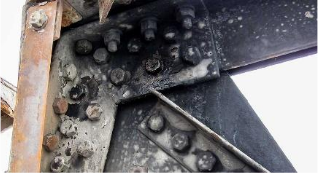 Significantly rusted connections, deformed bolts, cracked welds, and failed metal plate connections pose a significant risk to historic buildings under modern loads.
Furthermore, rusted or brittle connection failures can be sudden under dramatically increased loading.
Key Signs of connection failure include:
- Severe cracking, especially severe cracking with bulging.
- Excessive Floor Deformation
- Excessive Ceiling Sagging
- Rusted Connection Bolts, Rivets, and Plates
- Deformed Connection Bolts, Rivets, and Gussets
- Fractured Welds
- Concrete Cracking directly under heavy bearing plates and joist seats.
- Deformed, Buckled, Bent, or Warped Gusset Plates and Brackets.
Consult Preeminent Solutions’ Free Online Education Center for resources and checklists regarding structural deformations:
Link: https://psengrinc.com/learning/
Contact a qualified structural forensic expert should the subject structure display any of the above signs of connection failure.
-
Unreinforced/ Under-Reinforced Masonry Instability :
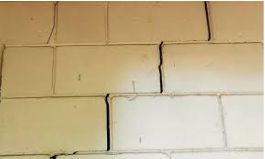 Many historic structures utilize unreinforced or under-reinforced masonry walls and columns in their vertical load resisting systems
Renovation changes, including excessive demolition and the removal of roof and slab diaphragm elements without appropriate temporary shoring, can destabilize these elements.
Likewise, renovation updates, including change-of-use increases in Equipment Live Loads and vibration loads, can overburden these elements’ shear capacity.
Key Signs of overburdening of masonry walls and columns include:
- Severe cracking, (i.e. Horizontal Cracks, Vertical Cracks, Stepwise Cracking)
- Severe Bulging paired with cracking
- Excessive Deflections
Contact a qualified structural forensic expert should the subject structure display any of the above signs of masonry instability.
-
Overloading due to Change-of-Use Live Load Increases :
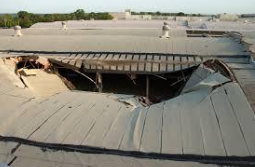 Change-of-Use Renovations may result in heighted Live Loads, including new Equipment Live Load demands and Equipment Vibration Load demands.
Key Signs of overburdening due to change-of-use load increases include:
- Severe cracking in Wall and Column Elements
- Severe Wall Bulging
- Excessive Deflections in Beam and Slab Elements
- Concrete Spalling and Chipping
Consult Preeminent Solutions’ Free Online Education Center for resources and checklists regarding structural overloading:
Link: https://psengrinc.com/learning/
Contact a qualified structural forensic expert should the subject structure display any of the above signs of overloading.
-
Water Intrusion :
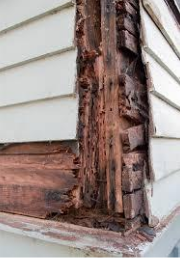 During renovation, historic materials are more susceptible to water intrusion.
Excessive water intrusion can damage wood framing elements and lead to corrosion in steel and cast-iron elements.
Key signs of water intrusion include:
- Warped Floorboards and Subflooring.
- Efflorescence in Concrete Structures
- Rust Staining in Reinforced Elements
- Rotted Frame Elements
Contact a qualified structural forensic expert should the subject structure display any of the above signs of water intrusion.
-
Hurricane wind uplift deficiencie :
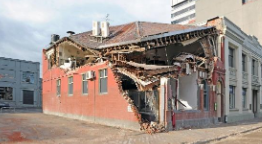 Renovations may trigger code upgrades depending on scope and local requirements, especially in hurricane prone regions.
Many structures may lack modern hurricane ties or straps or adequate diaphragm continuity leading to a compromised roof diaphragm.
Key signs of a compromised roof diaphragm include:
- Roof Separation at Inside Corners of “L” or “U” shaped buildings.
- Buckled, cracked, or fractured Chord Members
- Wall-to-Roof Separation:
- Unreinforced Floor Cutouts
- Connection Failures
Consult Preeminent Solutions’ Free Online Education Center for resources and checklists regarding structural deformations:
Link: https://psengrinc.com/learning/
Contact a qualified structural forensic expert should the subject structure display any of the above signs of a compromised roof diaphragm.
Early involvement of structural engineering and construction-defect experts can make or break a case.
Reach out if your team is in need of structural forensic or construction defect expert witness support.