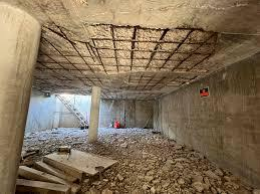
Per American Concrete Institute (ACI) “Building Code Requirements for Structural Concrete and Commentary,“ ACI 318-19, Chapter 19, key environments including marine environments, heavy industrial environments, sulfate-rich environments, and environments with extreme temperature change may constitute harsh environments for reinforced concrete structures.
Structural engineers must design non-load-bearing reinforced concrete structures (i.e. parapet walls, non-building structures, etc.) such that the structures can operate to the standard expected for the industry and such that the structures provide both adequate strength and durability.
2. What Are Examples of Structures with Harsh Environments?

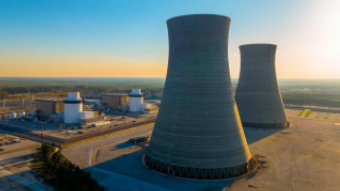
Examples of Heavy Industrial Structures with Harsh Environments include: • Energy Facilities: (i.e. Nuclear
Power Plants, Oil & Gas Refineries, Petrochemical Plants, and Gas/Hydroelectric Facilities.)
- Manufacturing Facilities: (i.e.
Aerospace Manufacturing Facilities, Aviation Manufacturing Facilities, Automotive Assembly Plants, Cement Plants, Clinker Plants, Steel Mills)
- Infrastructure Facilities: (i.e. Large Dams, Ports, and
Specialized Facilities for Waste Treatment or Hazardous Material Storage)
• Materials Processing Plants: (i.e. Metal Forges, Foundries, Glass Production Facilities, and Mining Operations.)
Examples of Marine Structures with Harsh Environments include:
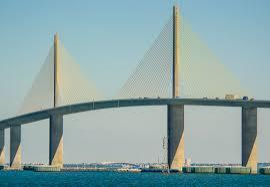
• Transportation Structures: (i.e. Docks, Ports, Bridges, Tunnels)
• Energy Infrastructure: (i.e. Offshore Platforms, Pipelines),
• Coastal Protection: (i.e. Seawalls, Breakwaters)
• Environmental Structures: (i.e. Artificial Reefs)
3. What Are the Causes of Deterioration?

Signs of deterioration in a concrete structure largely depend heavily on the structure age, initial design, environment, and loading. In general, we can expect signs of deterioration in older, under-designed structures in harsh environments after repeated exposed to higher loads.
In general, higher loads include:
• Wind Loads
• Seismic Loads
• Blast Loads,
• Thermal Loads
• Vibration Loads
Per ACI 201.2R-16, “Guide to Durable Concrete,” in general, harsh environments include environments that impose the following attacks unto the concrete:
• Sulfate Attacks
• Chloride Attacks
• Salt Attacks
It is essential to first Determine the cause of the Deterioration prior to Repair to ensure an effective Repair.
It is advised to consult a qualified structural engineer to assess structure and to determine causation.
4. So, How Can I Mitigate Deterioration?
It is Essential to First Assess the Cause of the Deterioration prior to Repair.
Once cause is determined. The following steps may be used to help repair.
Repair methods may include the following basic steps:
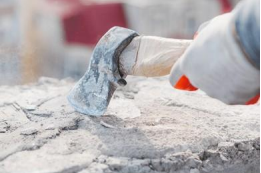
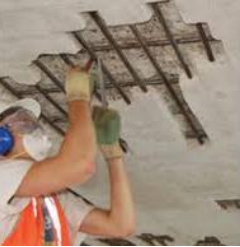
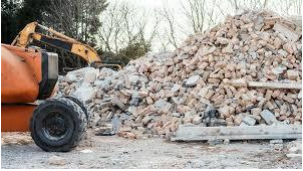
• Removal of Unsound Concrete,
• Inspection and Evaluation of Existing Rebar (for Corrosion Damage),
• Removal and Replacement of Damaged
• Application of Replacement Concrete
![]()

What is Unsound Concrete Cracking and Why Must it be Removed?
Unsound concrete refers to concrete subject to deterioration or disintegration during service exposure.
Per ACI 546, “Concrete Repair Guide”, all damaged concrete shall be removed.
Damaged concrete includes “unsound” or otherwise, delaminated

OK, How Much Unsound Concrete to Remove?
Concrete can be removed to a sufficient level such that the condition of existing rebar can be evaluated.

How To Remove the Concrete?
Concrete may be removed by cutting and later by chipping.
Special attention should be made to avoid cutting underlying reinforcement prior to evaluating the condition of said reinforcement.
![]()

What are Signs of Damaged/Affected Rebar?
Damaged/Affected Rebar includes corroded and/or severely deteriorated rebar and rebar with delaminated concrete.
Corroded or severely deteriorated rebar must be removed and replaced, in order to return the structure to design strength.
Per ACI 546, technicians shall remove concrete around such rebar to “create clear space behind the reinforcing steel of 6mm (0.25in), plus the dimension of the maximum aggregate size of the repair material.”
![]()

How to Remove and Replace Damaged Rebar?
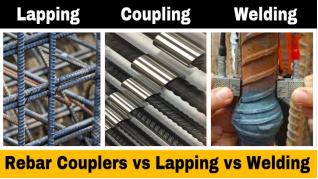
There are several ways to remove and replace damaged rebar.
One method involves replacement via mechanical splicing in accordance with ACI 318 and ACI 349.3R or welded splicing in accordance with ACI 318 and American Welding Society (AWS) D1.4.
Technicians can cut out the damaged area and splice in replacement bars.
The length of the lap should conform to the requirements of ACI 318.
It is advised to consult a qualified structural engineer to determine causation sufficient lap
length.
• What about Long-Term Care?
Apply a bonding or anti-corrosion agent be applied to exposed steel reinforcement to reduce risk of corrosion.
![]()

• What Concrete Options Are There?
All damaged and/or deteriorated concrete must be removed.
There are several options for cementitious repair.
Options include conventional concrete, conventional mortars, proprietary repair mortars, Polymer-cement concrete (PCC), and more
To ensure compatibly, first review the proportions of ingredients of the cementitious mixtures. Ensure the proportions match those of the existing concrete to ensure adhesion.
After a sufficient option has been selected, technicians must prepare the component.


Component Preparation?
Component preparation is required to ensure sufficient adhesion between the new and existing concrete materials and the reinforcement.
Component preparation, involves the roughening of the surface to meet shape and texture recommendations as presented in standards such as the International Concrete Repair Institute Technical Guideline No. 03730 (ICRI 03730) and Technical Guideline No. 03732 (ICRI 03732) and to ensure sufficient adhesion between the new and existing concrete materials and the reinforcement.
There are several options for component preparation.
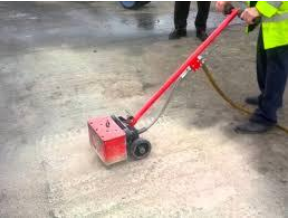
One option includes mechanical preparation. Per ACI 546, mechanical preparation includes Application of Replacement Concrete “mechanically removing thin layers of surface concrete using equipment such as impacting tools (breakers and scabblers), grinders, and scarifiers.”
If mechanical preparation is not desired abrasive preparation may also be considered, once care is taken to not damage the existing reinforcement steel.
• Formwork and Placement of New Concrete
Proper Formwork and Concrete Placement are Essential to Complete the Repair.
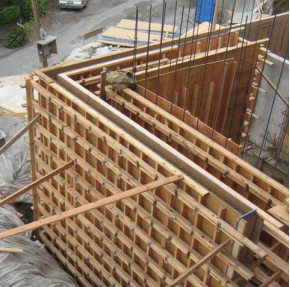
Technicians should construct formwork to meet structure’s shape and size.
Following the proper erection of formwork, concrete should be pour concrete to allow sufficient clear cover above rebar.
Concrete should be allowed to cure for 28 days or the minimum required for the particular mixture and environmental conditions.
When You and Your Team Need Civil/Structural Support
Give Us A Call!
Vanessa Malone, P.E.
Principal | Preeminent Solutions, Inc.
📞 (321) 244-8699 | (407) 901-0133
✉️ info@psengrinc.com
🌐 www.psengrinc.com

Author
-
Vanessa Malone, P.E. is the Owner of Preeminent Solutions, Inc.
She is a licensed civil / structural engineer with almost 15 years’ experience in civil/structural design, forensics, and expert work.
She is licensed in Florida, California, Texas, Washington D.C., Virginia, Maryland, New York, New Jersey, Louisiana, Georgia, Mississippi, North Carolina Tennessee, and several other states and territories.
She has worked with Thornton Tomasetti, Westinghouse, NASA, NOAA, the Navy, Southern Nuclear, General Electric, Bechtel, and other companies.
Malone is a first generation American. She first emigrated to the continental United States almost 20 years ago.
Malone shares her love of engineering through her company and through her interactions with other firms.
Thank you and we look forward to serving you!